Follow @Emiearth on X for more expert analysis.
“Do you know the relationship, the bilateral relationship we have with Qatar as a government? Then Nigeria will not be in Qatar? It’s not… just think about it.
“You want to see Buhari in Qatar, and he will gladly come to Qatar.”
Those were the infamous words of Amaju Pinnick, the then President of the Nigeria Football Federation, just before the Super Eagles’ wings were clipped at the Abuja Stadium by Ghana’s Black Stars – a result which denied Nigeria a place at the 2022 FIFA World Cup.
Looking back, Pinnick, now 54, still admits that failure as “one of my lowest moments in life.”
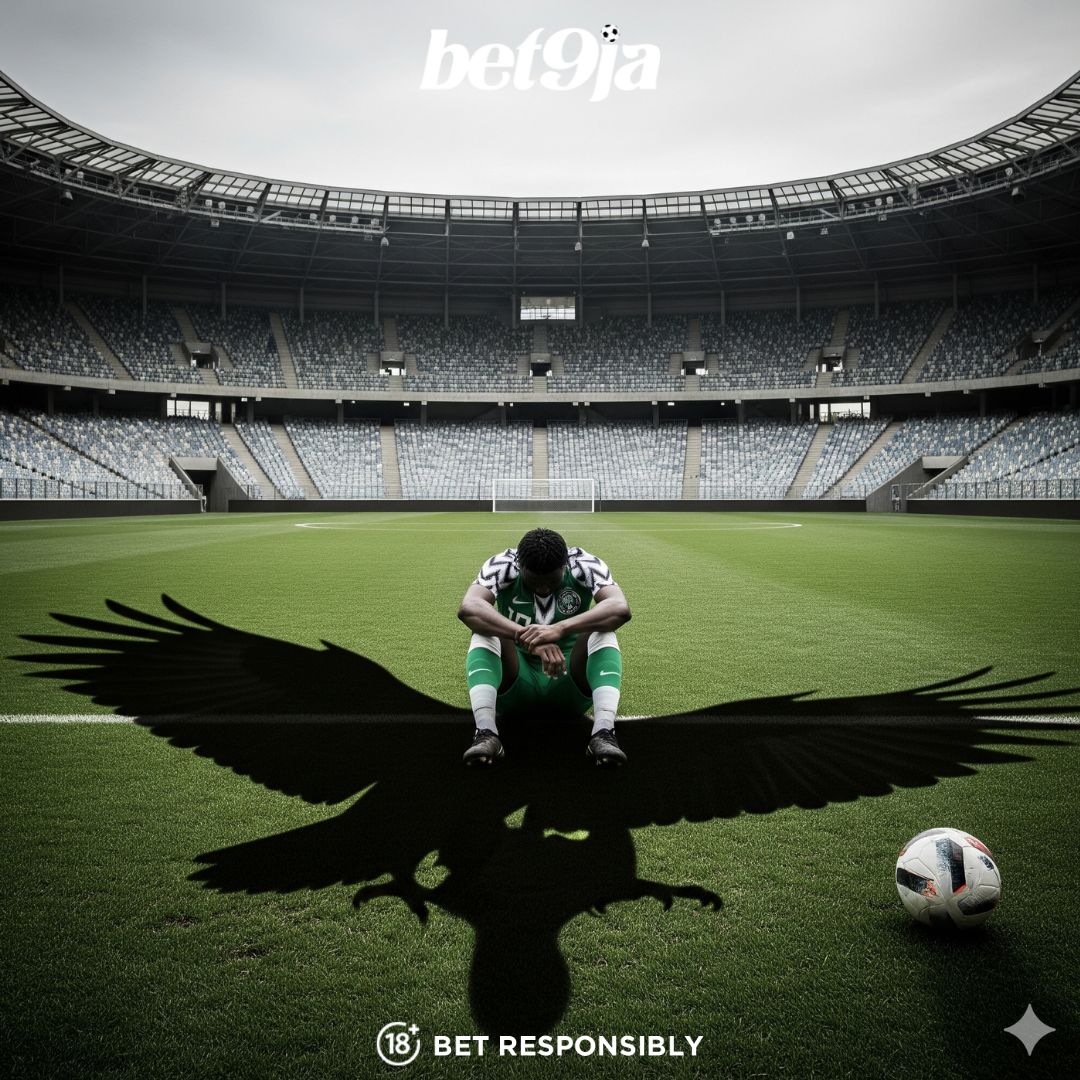
The disappointment of missing out of the glamour in Qatar was sharp but tempered by hope. The next edition, many thought, would be the chance to set things right. Yet here we are again, 41 months and 11 days since that fateful night on 29 March, 2022, when Ghana ended Nigeria’s World Cup hopes in Abuja staring down the reality that the Super Eagles, Africa’s most followed national team, will be absent – again.
The 1-1 draw against South Africa in Bloemfontein has all but extinguished hopes of seeing the green-and-white flag hoisted at the 2026 World Cup in North America. Once confirmed, this would not just be a sporting setback but a moment of reckoning for Nigerian football, with implications that cut across the economy and national identity.
Missed Glory
For a football-obsessed nation like Nigeria, missing out on the World Cup is more than just a failed qualification campaign, but the absence of national pride at the biggest stage. It’s a tournament which has always provided a platform for Nigeria to not only compete but also showcase its beauty and talent inherent to the world.
From Rashidi Yekini’s iconic goal celebration in 1994, Sunday Oliseh’s thunderbolt against Spain in 1998, down to the Ahmed Musa’s brace against Argentina in 2014, the Eagles have provided moments that defined Nigerian sporting identity. Now, those memories feel more like relics than steppingstones.
With 48 teams, Africa was guaranteed nine direct slots, almost doubling the continent’s previous allocation. In other words, qualifying was supposed to be easier. For Nigeria, not making it under these conditions underscores just how deep the problems in the system run. This hurts not just the players but also the psyche of millions who use football as a collective escape from everyday struggles.
Economic Impact
The FIFA World Cup is considered the greatest sporting event in the world, a global showcase for players, coaches, and football systems. For context, Senegal’s run in Qatar in 2022 not only boosted the profile of their players but also consolidated the country’s reputation as a rising football powerhouse. Nigeria, with all its talent, now looks like a nation stuck in rewind.
Missing out on the World Cup also carries significant economic consequences. The Nigerian Football Federation (NFF) relies heavily on sponsorship deals and government funding, both of which are closely tied to the visibility of the Super Eagles. A World Cup appearance generates millions in prize money, sponsorship activations, and merchandise sales. Consecutive failures to qualify place the federation under financial strain, particularly given its ongoing challenges with transparency and accountability
Beyond the NFF, there is the broader football economy: broadcast organizations, viewing centers across the nation, local jersey vendors, small businesses that thrive during international tournaments. The World Cup period is usually a carnival in Nigeria with fans gathering in bars and neighborhoods, fueling spending and creating temporary jobs.
Without the Eagles in the mix, that atmosphere and the revenue attached evaporates.
?? ????? ?????? ?? ???? ???? ????? ?? ??? ???? ??
— Bet9ja: The home of #betBOOM! ? (@Bet9jaOfficial) September 10, 2025
Are you ready to go 1Up?! ?
The African Context
Three-time African champions with multiple final appearances, the Super Eagles’ most recent heartbreak came at the 2023 Africa Cup of Nations, where they narrowly lost 2-1 to host nation Côte d’Ivoire.
The team’s failure to qualify for the World Cup shifts the balance of football power on the continent. For decades, the Super Eagles have been seen as Africa’s standard-bearers, a presence on the world stage almost taken for granted. As with any vacuum, their absence creates opportunities for others – Morocco, Senegal, Ghana, and even smaller nations like Burkina Faso or Mali, to step into the spotlight.
Morocco’s historic semi-final run in 2022 showed that African football is not waiting for Nigeria to get its act together. Despite Nigeria’s abundance of talent, the risk is real: the Super Eagles could slip from the conversation as Africa’s leading football nation, especially as other countries invest heavily in youth academies and infrastructures.
The NFF
At the heart of Nigeria’s struggles is a crisis of leadership and vision. The NFF’s short-term approach has consistently hampered the Super Eagles, with coaches hired and fired without regard for a long-term strategy.
Every failed qualification coincided with coaching instability, including frequent changes, mid-campaign sackings, or late appointments, whereas successful cycles – such as 1994, 1998, 2002, 2010, 2014, and 2018, benefited from a strong coach leading consistently through the qualifiers, like Westerhof, Bonfrère, Keshi, and Rohr.
Player development pipelines are also neglected with the local league structures barely functioning. By contrast, countries like Morocco continually invest in the growth of the game at every level. Nigeria possesses immense talent, arguably one of the deepest pools in Africa, as reflected in recent CAF awards – but lacks the structure to harness it consistently. An obsession with instant results sidelines youth development, while the domestic league receives little attention or support. Many of South Africa’s Bafana Bafana players stay in the country and earn substantial salaries in the PSL, a very different story for most players in Nigeria’s NPFL.
Missing out on the 2026 World Cup should force Nigerian football authorities to confront these structural deficiencies, though history suggests otherwise.
The Fans
As a commentator on the Super Eagles’ official Twitter Space during the World Cup qualifiers, it was clear that Nigerian fans remain among the most passionate in world football. The remarks from participants were raw, you could feel the pain as reality sank in. Yet even loyalty has its limits. Repeated failures risk breeding apathy, particularly among younger fans growing up witnessing Nigeria miss crucial moments.
It is a bitter pill, one that could further widen the gap between the people and the institutions running the game.
Full-time: ?? South Africa 1-1 Nigeria ??
— Bet9ja: The home of #betBOOM! ? (@Bet9jaOfficial) September 9, 2025
Calvin Bassey's goal earns the Super Eagles a point but damages our World Cup prospects! pic.twitter.com/oc1xhiVrws
What Next?
As grim as it seems, missing out on the 2026 World Cup could serve as a wake-up call, if Nigeria (The NFF) decide to be proactive. Sometimes failure provides the clearest mirror. As a nation, we must ask some difficult questions such as:
- Why does a nation with so much talent consistently underperform?
- Why is there no coherent football philosophy from grassroots to the national team?
- Why do we have only two approved stadiums to host international games?
The latter is nothing short of shameful for a nation that prides itself as Africa’s finest. Yet the reasons Nigeria failed to qualify for the 2026 World Cup cannot be solved by scapegoating players or coaches; they lie in confronting the systemic rot. The country needs a football reset, one which prioritises long-term planning, invests in grassroots development, empowers competent leadership, and embraces true accountability.