Follow @Emiearth on X for more expert analysis.
“It’ll be a shame if we don’t make it,” Super Eagles midfielder Alex Iwobi told CNN just before the African play-offs for the 2026 World Cup kicked off in Morocco.
He wasn’t wrong. There is no reason a football-loving nation blessed with immense talent should carry the unflattering record of missing back-to-back FIFA World Cups. Since their debut in 1994, Nigeria have missed the tournament only twice – in 2006 and 2022.
Drawn alongside South Africa, Benin, Lesotho, Rwanda, and Zimbabwe, the odds, even before a ball was kicked favoured the Super Eagles. Yet somehow the team contrived to bottle a golden opportunity to right the wrongs of four years ago, finishing the group stage with four wins, five draws, and a single defeat – delivered by former Nigeria coach Gernot Rohr and his resurgent Benin Squirrels.
The final round of group matches kicked off simultaneously. South Africa needed a win to secure top spot, while Nigeria required not just victory but a convincing one to sneak into the final runners-up slot. And, good gracious, they rolled back the years, delivering the kind of performance you dream of in high-pressure moments: a 4–0 demolition of Benin in Uyo.
Victor Osimhen was electric, firing a hat-trick on a night that felt like redemption. It wasn’t the sweet homecoming Rohr might have hoped for; his Squirrels ran into a Super Eagles side that finally looked every inch a World Cup-bound team.
After that wonder night, captain William Troost-Ekong spoke brightly, agreeing there was no room left for errors.
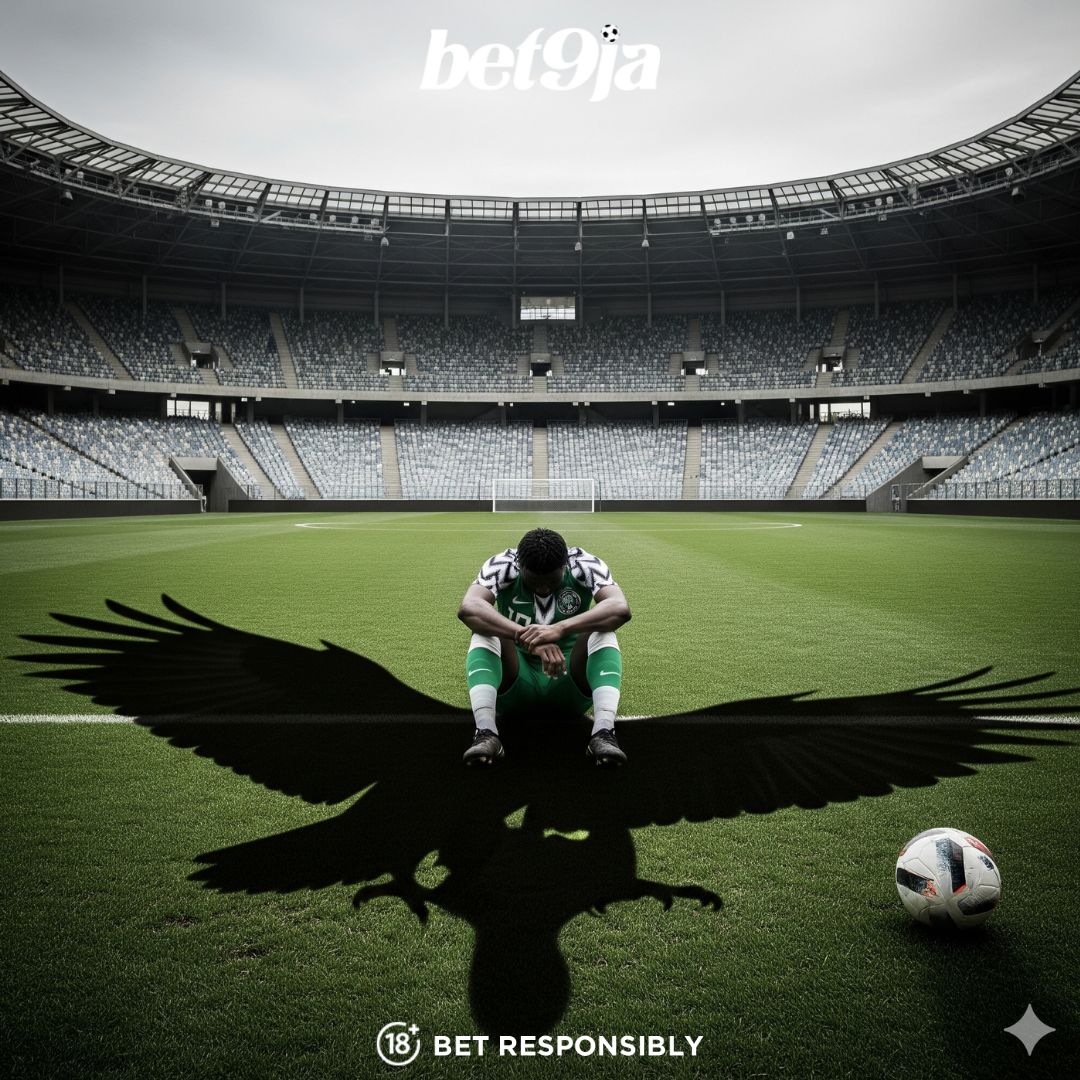
What went wrong for the Super Eagles last night?! ? pic.twitter.com/avpwHkNywR
— Bet9ja: The home of #betBOOM! ? (@Bet9jaOfficial) November 17, 2025
He said: “It was a wonderful team effort on Tuesday evening. Everyone contributed; each person played their part. If the other match had gone in favour, we would be with the automatic ticket now. But that’s life. You take what you get and run with it, and make the best of it.
“We are quite happy to have that opportunity (the playoffs). It is a long route but it is a route afterall”
Weeks later, their wings were clipped, dreams dashed. The wounds patched up since 2022 were ripped open again following Sunday’s defeat to DR Congo in the African play-offs final.
Football is a game where you win or lose, in this case, there was no avenue to take a point. But judging by individual quality alone, there was no universe in which DR Congo should have taken that ticket ahead of Nigeria. Yet football rarely rewards hopes or reputations. Its gifts go to teams that desire them the most. And on that night at the Prince Moulay Hassan Stadium in Rabat, it was Chancel Mbemba’s DR Congo who displayed the desire and resilience required.
If you can beat Cameroon and Nigeria three days apart in a knockout playoff, you deserve a place at the World Cup – especially when you’re not Brazil.
Predictably, once it sank in that Nigeria had again missed out on the world’s biggest football showpiece, frustration spilled over. Fans called for the heads of players; others blamed the federation; a louder group pointed to the fragile tactical capacity of coach Eric Chelle.
The latter criticism carries weight. In hindsight, it was unwise for Chelle to tinker with the starting line-up after the team’s outstanding semi-final performance against Gabon – even if extra time was needed. And how ordinary the team looked once Osimhen was substituted at half-time raises further questions about his tactical judgement.
But football has moved far beyond talent alone. It requires administrators who, beyond enjoying the perks of office, genuinely care about the development of the game.
At the heart of Nigeria’s struggles is a crisis of leadership and vision. The NFF not only let the team down with delayed payments but continues to indulge in reckless managerial instability.
Their short-term approach has consistently hampered the Super Eagles, with coaches hired and fired without regard for a long-term strategy. Every failed qualification coincided with coaching instability, including frequent changes, mid-campaign sackings, or late appointments, whereas successful cycles – such as 1994, 1998, 2002, 2010, 2014, and 2018, benefited from a strong coach leading consistently through the qualifiers, like Westerhof, Bonfrère, Keshi, and Rohr.
Player development pipelines have also been neglected. Local league structures barely function. Other African nations are leveling up, improving logistics, planning better, and closing the gap rapidly.
What Next?
As grim as it feels, missing out on the 2026 World Cup could serve as a wake-up call ONLY if the NFF chooses to be proactive. Sometimes failure provides the clearest mirror. As a football nation, Nigeria must ask some hard questions:
• Why does a nation with so much talent consistently underperform?
• Why is there no coherent football philosophy from grassroots to the national team?
• Why do we have only two CAF-approved stadiums for international fixtures?
The last point is nothing short of shameful for a nation that prides itself as Africa’s football giant.
Nigeria’s failure to qualify for the 2026 World Cup cannot be solved by scapegoating players or coaches. The answers lie in confronting systemic decay. Talent alone is no longer enough. If Nigeria hopes to avoid reliving the horrors of 2022 and 2026 in 2030, all hands must be on deck.
What the country needs is a football reset, one which prioritises long-term planning, invests in grassroots development, empowers competent leadership, and embraces real accountability. That said, the only compensation for this heartbreak would be winning the AFCON on the same Moroccan soil. But can we truly do it?