
Follow @iambolar on X for more expert analysis.
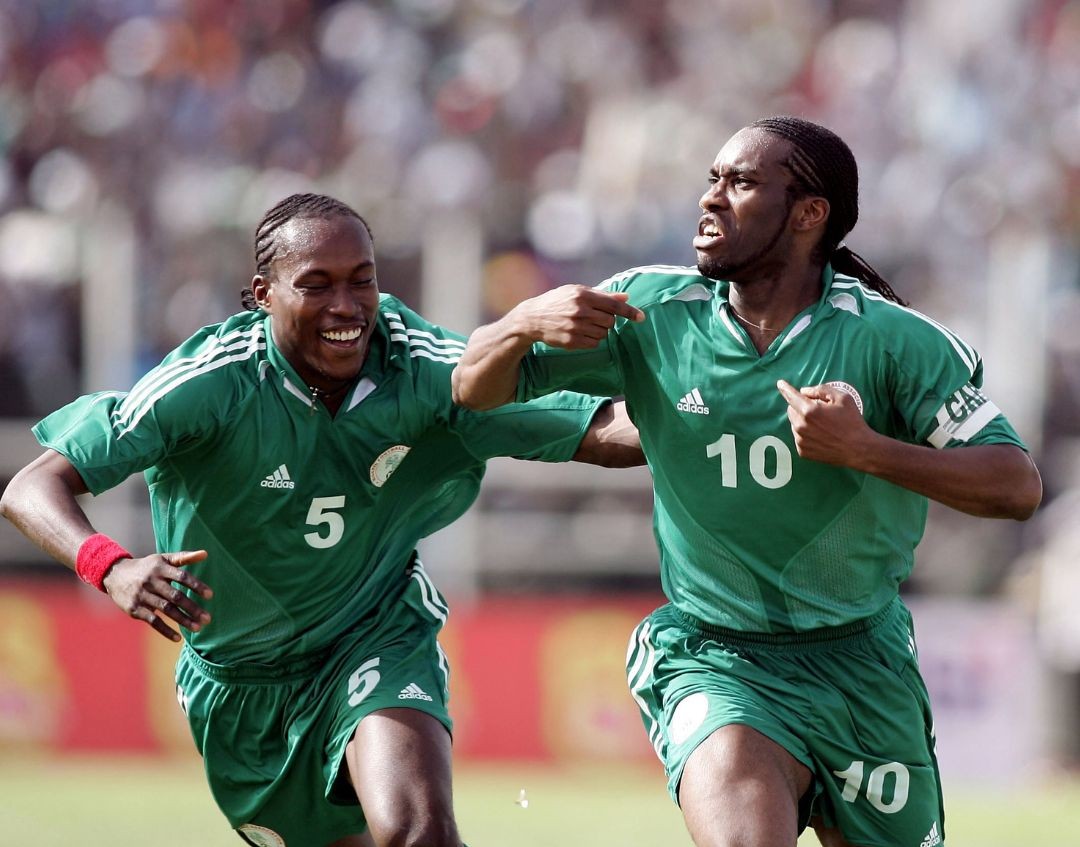
There are footballers who play the game – and then there are the rare few who paint on grass. For Nigeria, for Africa, and for anyone who has ever fallen in love with the beauty of football, Augustine “Jay-Jay” Okocha was an experience.
He didn’t run with the ball, he danced with it. He didn’t dribble past defenders, he hypnotized them.
This is the story of the man who made football feel like magic.
Okocha’s legend began on the streets of Enugu, where football was simply a language. And Jay?Jay spoke it fluently.
Every move he made looked like it came from a place between instinct and artistry. Even as a teenager, he played football like someone who had seen the game in a dream.
His journey to Europe was almost accidental. Visiting a friend in Germany, he joined a casual training session, and within minutes, the coaches were stunned.
He signed for Eintracht Frankfurt, and suddenly the Bundesliga had a new attraction.
Fans didn’t come to see Frankfurt. They came to see Jay?Jay.
And then came that goal – the one that still lives in highlight reels.
A dribble so disrespectful, so outrageous, that even Oliver Kahn – one of the most intimidating goalkeepers in history – was left crawling helplessly on the turf.
When Paris Saint?Germain signed Okocha for a then?African record fee, they bought a show.
And in Paris, he met a young Brazilian named Ronaldinho. The world would later call Ronaldinho the greatest entertainer football has ever seen. But Ronaldinho himself once said he learned from Okocha.
Then came the move nobody expected – a superstar joining Bolton Wanderers, a modest Premier League club fighting relegation.
But Okocha didn’t care about status. He cared about football. And in Bolton, he became a legend.
He didn’t just keep them in the Premier League – he made them fun. Every touch felt like a trick.
Every stadium he visited held its breath when he got the ball. Bolton fans still sing his name today. They don’t remember him as a player. They remember him as a miracle.
For Nigeria, Okocha was a symbol.
- The 1994 AFCON brilliance
- The Olympic gold in 1996
- The unforgettable free kicks
- The leadership
- The swagger
- The joy
He played with the spirit of a street kid who never forgot where he came from.
He played with the pride of a man carrying a nation’s heartbeat.
And when he wore the green and white, Nigeria performed.
In an era obsessed with stats, goals, and trophies, Okocha’s greatness lives somewhere else. He was an artist.
Some players are remembered for what they won. Jay?Jay Okocha is remembered for how he made people feel. And that is the rarest kind of immortality.



1 Comment
by Institute of Physical and Sport Sciences 1
this article was really heplful .Looking forward to more wonderful articles from you.
Developing skills at the Institute of Physical and Sport Sciences, University of M’sila.