Follow Mike_ThePundit on X for more expert analysis.
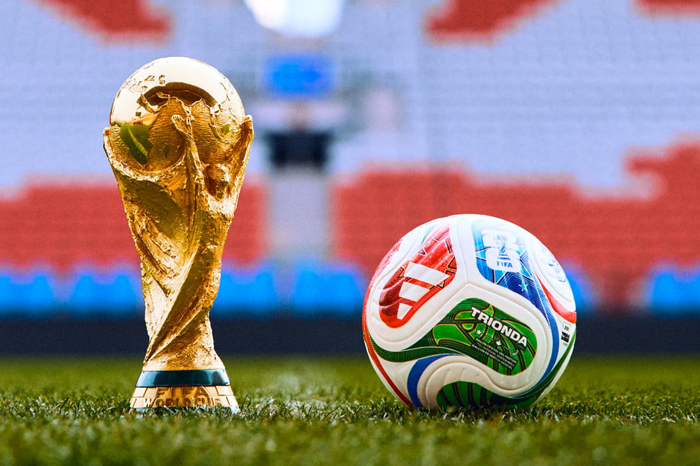
In a few days, the eyes of the football world will once again settle on the biggest show the sport has to offer.
For the next month, conversations in houses, offices, a gathering of friends and social media timelines will revolve around one thing: the FIFA World Cup.
Or soccer, as they will insist on calling it across parts of the United States, one of the three host nations welcoming the tournament for the first time in more than three decades.
The build-up has been anything but straightforward.
There have been political tensions, logistical concerns, qualification heartbreaks and enough off-field drama to fill an entire tournament of its own. Traditional powers have fallen by the wayside. New faces have emerged. More than once, questions were asked about what shape this World Cup would eventually take.
Now, with the opening whistle fast approaching, all of that fades into the background.
The arguments are over. The predictions are in. The waiting is almost done.
It is World Cup time again.
And from an African perspective, this tournament arrives carrying a particularly fascinating subplot.
For a second World Cup in a row, after missing Qatar 2022, Nigeria will not be part of the conversation. One of Africa’s most recognisable footballing brands, a nation whose World Cup journey has often mirrored the continent’s own ambitions, will be watching from home.
Yet Africa heads to North America with more representatives than ever before, 10 in total, buoyed by the belief sparked by Morocco’s historic run to the semi-finals four years ago, and a growing sense that the gap between the continent and football’s traditional powers is narrowing.
The question is no longer whether African teams can compete on this stage.
Morocco answered that in Qatar.
The question now is whether Africa can repeat it, or even go one step further, and what chances the teams carry into this edition of the World Cup.
Starting with Morocco.
Qatar 2022 was their breakthrough. 2026 is different. This time, they arrive not as outsiders or disruptors but as a benchmark, a team others measure themselves against, with expectations firmly on their shoulders.
What made that 2022 World Cup run so significant was not just the victories over Spain and Portugal. It was their manner. Both opponents left the pitch looking structurally confused, unsure how to progress the ball, unsure how to break Morocco down. It was control without dominance of possession, organisation without compromise.
They have since carried that momentum forward. Morocco are the current holders of the Africa Cup of Nations, following the final they played on 18 January 2025, which, under the judgement passed regarding Senegal’s breach of regulations, confirmed Morocco as champions. That achievement reinforced the idea that this is no longer a one-off generation but a sustained level.
Reaching that final in itself underlined how far they have come. Credit again goes to Walid Regragui, who guided them to the 2022 World Cup semi-finals in Qatar and helped establish the foundation for what followed.
From there to an AFCON final and now into a new cycle, the trajectory has been steady. The expectation now is no longer just results but performance, how they look, how they impose themselves, and whether there is visible progress in the way they play.
There is still a strong spine to rely on: Achraf Hakimi, Yassine Bounou, Noussair Mazraoui, Youssef En-Nesyri, Abdessamad Ezzalzouli, Ismael Saibari, and Azzedine Ounahi among others. The quality is not in doubt.
It’s left to see whether Mohamed Ouahbi, appointed in March, can carry that structure forward while adding his own ideas, and whether Morocco can maintain their upward trajectory as expectations are higher.
Morocco are in Group C alongside Brazil, Haiti, and Scotland.
Onto Senegal.
Senegal were, on the pitch, champions of the 2025 Africa Cup of Nations before the title was later awarded to Morocco following a ruling. The case has since been taken to CAS, and they remain confident it will be overturned. The trophy is still in their possession, the medals still with the players. In that sense, there is still a strong argument to refer to them as African champions, depending on which version of events you accept.
What is not in doubt is how firmly they have stayed at the top end of African football since their 2021 AFCON triumph in Cameroon. They have not drifted from contention, nor slipped into transition. Instead, they have evolved into a side that feels consistently present at the highest level.
More than most teams on the continent, Senegal look like a finished product. There is physical dominance across the pitch, but it is no longer just about power.
There is control in their tempo, a clearer balance between youth and experience, and enough pace in key areas to stretch opponents when needed.
It is a squad built to compete across different game states. They can slow matches down, speed them up, or simply outmuscle opponents when structure breaks down. That versatility is what separates them from most of their rivals.
Senegal are in Group I alongside France, Iraq, and Norway.
Next up are Ivory Coast.
The Elephants know better than most how quickly football narratives can change.
Two years ago, they were staring at an embarrassing group-stage exit on home soil during the 2023 Africa Cup of Nations. By the end of the tournament, they were champions of Africa. It remains one of the most improbable triumphs in recent memory and a reminder that tournament football rarely follows a script.
Since then, Ivory Coast have looked like a team trying to balance the momentum of that success with the reality of building for the future.
The talent is certainly there. The likes of Ousmane Diomande and Amad Diallo continue to grow as one of the finest young wingers in Africa, Evan Ndicka and Yahia Fofana and many others provide a solid foundation through the spine of the team.
They are a team capable of surviving difficult moments and finding solutions when games get tough and if they find rhythm early, they have enough quality to trouble almost anybody.
Their win against France, one of the favorites shows they are one team to worry about.
Ivory Coast are in Group E alongside Curacao, Ecuador, and Germany.
Onto Egypt.
The ones you can call local champions.
For all their dominance on the African continent, seven AFCON titles and decades of influence, World Cups have rarely provided the same memories.
Egypt’s representation at the 2026 World Cup will be their fourth time at the Mundial.
They crashed out in the first round in Italy 1934, and then exited at the group stage in Italy 1990 and Russia 2018.
This time around, they’ll be hoping to give a better account of themselves. To be fair, they don’t rank among the teams expected to give Africa its strongest representation, given the overall quality of the squad.
The good news is that they still possess one of the continent’s greatest players. Mohamed Salah may be in the latter stages of his international career, but he remains the face of the team and the player opponents fear most.
Perhaps it may be Salah’s last World Cup, and if he delivers a memorable tournament, Egypt could yet become one of Africa’s most dangerous representatives.
Egypt are in Group G alongside Belgium, Iran, and New Zealand.
Algeria next.
Algeria head into the tournament with something to prove.
Their failure to qualify for Qatar 2022 remains one of the continent’s biggest recent disappointments. For a generation that won the 2019 Africa Cup of Nations and produced some of Africa’s most technically gifted footballers, missing the biggest stage was difficult to accept.
Now they are back.
There is still plenty of quality available. Riyad Mahrez, who played his last AFCON in January, remains the headline name, while a blend of experienced internationals and emerging talent gives Algeria a squad capable of controlling possession and dictating games. This could also be his last World Cup.
They have traditionally been one of Africa’s most technically refined sides, preferring to play through midfield rather than relying solely on athleticism and transitions.
That approach can be effective against teams willing to engage.
The question is whether Algeria can maintain their composure when games become physical, direct and unpredictable.
If they manage that balance, they could quietly become one of Africa’s strongest performers.
Their victory over the Netherlands in a friendly is one result that offers a hint of what to expect.
Algeria are in Group J alongside Argentina, Austria, and Jordan.
Tunisia next.
One interesting thing about Tunisia is that since the 1998 World Cup in France, they have missed just two editions of the tournament, South Africa 2010 and Brazil 2014.
That tells you one thing: when it comes to qualifying for the Mundial, Tunisia rarely finds it difficult.
The unfortunate part, though, is that they have never progressed beyond the group stage at any World Cup, including their first appearance, the 1978 own.
That record, coupled with their recent performances on the African stage, makes them one of the weaker links if not the weakest link among Africa’s representatives at this World Cup.
It would not be surprising if they struggle to compete and ultimately deliver another disappointing campaign, especially given the look of their group opponents.
Tunisia are in Group F alongside Japan, Netherlands, and Sweden.
Onto the South, and we go to South Africa.
The last time South Africa played at the World Cup, they hosted it in 2010.
This will be their fourth World Cup appearance, and they have never made it past the group stage.
Even on the African stage, they have only won the AFCON once. But they have often shown a knack for historic moments or unexpected results. For example, who could forget the first goal of the 2010 World Cup? A superb strike from Siphiwe Tshabalala to give them the lead against Mexico, in a game that would also serve as the curtain-raiser for the 2026 World Cup, interestingly.
South Africa have built much of their strength around players in the domestic league, the PSL, and have relied heavily on them to deliver on the international stage.
They will hope to finally progress beyond the group stage this time, and with the expanded 48-team format, and eight third-placed teams qualifying, they will feel they have a genuine chance, perhaps even to finish in the top two.
South Africa are in Group A alongside Mexico, the Czech Republic and South Korea.
Ghana next.
Ghana know how to play at the World Cup. Since their first appearance in 2006, the only one they have missed was Russia 2018.
They have also produced unforgettable World Cup moments including the dramatic run to the quarter-finals in 2010 and the heartbreak against Uruguay.
This generation enters with less hype than some of those famous teams of the past.
The squad is not fully stacked in every area, but there are still attacking talents like Jordan Ayew, Antoine Semenyo and Inaki Williams. It is also unfortunate that Mohammed Kudus could not make the squad due to injury.
Since AFCON 2021, Ghana have not progressed to the knockout round of any major tournament, a group stage exit at AFCON 2021, a group stage exit at the 2022 World Cup, another group stage exit at AFCON 2023, and failure to qualify for AFCON 2025.
A typical Ghana supporter does not have much hope for the team to go far at this World Cup, but they will still get behind them and hope it is not a sour tournament.
The players, in turn, will be hoping to give the fans and the nation something to remember in a positive light.
Ghana are in Group L alongside Croatia, England, and Panama.
Finally, there is a newcomer and a long-awaited returnee, Cape Verde and DR Congo.
They arrive carrying different stories, but perhaps similar ones.
DR Congo’s only appearance at the World Cup was in 1974 in West Germany. Their qualification for the 2026 World Cup ended a 52-year wait.
For Cape Verde, they have never appeared at the Mundial and this is their first-ever qualification. It was not a fluke either, they made history by qualifying ahead of giants Cameroon in their group.
For Cape Verde, qualification stands as one of the great achievements in African football. A nation of just over half a million people has earned its place among the world’s best through organisation, planning and an impressive generation of players developed largely across Europe.
They may lack the depth of some rivals, but they make up for it with discipline and togetherness.
DR Congo’s qualification carries a different kind of significance.
For decades, Congolese football has produced talented players who have gone on to shine elsewhere. Yet the national team itself has often struggled to fulfil that potential.
That has finally changed.
In recent years under Sébastien Desabre, they have shown they are strong and capable of competing with the big teams, and perhaps they are not far off the very top of African football.
There is athleticism, physicality and growing confidence within the squad, while qualification itself has generated enormous excitement back home.
Both nations arrive without the pressure that follows some of Africa’s traditional heavyweights. That freedom can be dangerous.
History suggests every World Cup produces a surprise story.
Cape Verde and DR Congo will believe they can be that story.
Cape Verde are in Group H alongside Saudi Arabia, Spain and Uruguay.
DR Congo are in Group K alongside Colombia, Portugal, and Uzbekistan.
For the first time in two decades since Nigeria began appearing at the World Cup in USA 1994, the Super Eagles of Nigeria will watch from home.
Ordinarily, that would have dominated the African conversation heading into the tournament. But perhaps that, in itself, is a sign of how much has changed.
Four years ago, Morocco changed the conversation for Africa, and proved that an African team could sit at football’s top table and belong there.
Now comes the harder part.
Doing it again.
And maybe, just maybe, going one step further.