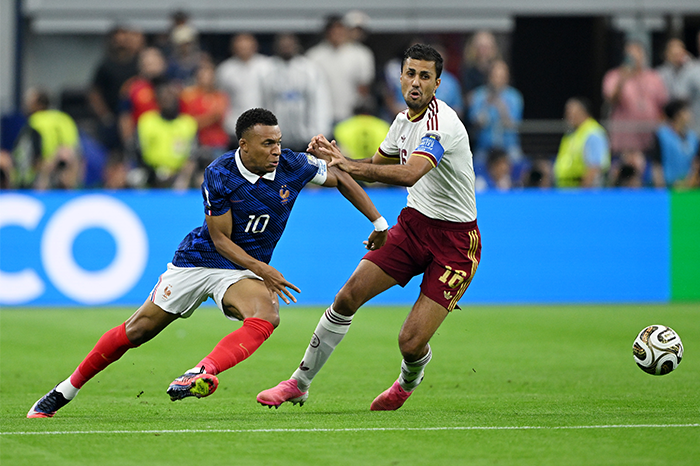
Follow Mike_ThePundit on X for more expert analysis
Thirty-nine days later, the 2026 FIFA World Cup is over.
It’s been an enthralling 39 days as the 2026 FIFA World Cup unfolded.
Before the tournament, there were doubts about how much excitement this World Cup could truly produce. Ticket pricing, visa restrictions and several other concerns dominated conversations, with many believing they could affect the tournament.
Anyone who has truly followed the World Cup over the years, though, would have known those issues were never going to overshadow the beauty of the competition or the excitement it always brings.
And that was exactly how the 2026 FIFA World Cup played out.
One hundred and four matches. Forty-eight teams. Spain are deservedly world champions. A second star now sits above their crest.
The 2026 World Cup had everything: goals, saves, dribbles, passes and big stars delivering when it mattered most. And now, it has its champion.
As much as Spain emerged as champions, the tournament also produced several other heroes. Who could have imagined debutants Cape Verde holding both finalists, Spain and Argentina, without losing to either in 90 minutes? Or progressing from a group containing Spain, Saudi Arabia and Uruguay? And that was just one of many remarkable stories.
Now that the World Cup has come to an end, the conversations inevitably begin. Why was one player left out of the Team of the Tournament? Why was another included?
It is always going to be a debate.
Picking a Team of the Tournament is never an exact science. Should it reward only players from the champions? Should the best footballer in a losing side be overlooked simply because his team fell short? Does consistency matter more than decisive moments?
There is no perfect formula.
There never will be.
This is mine.
Goalkeeper: Unai Simón (Spain)
Spain conceded just one goal, fewer than any other team, on their way to becoming world champions. To reduce Unai Simón’s tournament to just clean sheets would be doing him a disservice.
He was so involved in Spain’s build-up. As much as he made saves, he also enabled his team to hold such a high defensive line. His sweeping, especially against pacey forwards, was measured, well-timed and almost always the right decision.
When he needed to come and claim the ball, he did. When he needed to make crucial saves to keep his team in games, he did that too.
What a tournament he had. Rightly so, he walked away with the Golden Glove.
Right-back: Pedro Porro (Spain)
There were spectacular full-backs at this tournament.
I’m not convinced there was a more complete one.
Porro’s role changed depending on the opponent, which is exactly why he makes my team. Against deeper defensive blocks, he almost played as an auxiliary winger, stretching the pitch and delivering quality into the box. Against stronger sides, he was just as disciplined defensively, knowing when to stay connected with Cubarsí rather than gambling forward.
He understood when to overlap, when to invert into midfield, and when to simply recycle possession. It sounds simple until you realise how many full-backs struggled to balance those responsibilities throughout the tournament.
He managed that balance in almost every game.
Centre-back: William Saliba (France)
Prior to the third-place game, where France conceded six against England, they had let in just four goals throughout the tournament, up to and including the semi-finals.
France reached the semi-finals largely because they remained difficult to play through until they met Spain, and Saliba was central to that. He defended aggressively without becoming reckless, recovered space superbly whenever France lost possession, and consistently won his individual duels. Having picked up an injury in the semi-final, his absence was clearly felt.
Saliba has been one of the best defenders in the world for a couple of years now, and his performances on this stage showed exactly why.
Centre-back: Pau Cubarsí (Spain)
The easiest story to write would have been about Cubarsí’s age.
I don’t think it mattered.
By the end of this World Cup, nobody was describing him as a teenage defender anymore. He was simply one of the tournament’s best centre-backs, perhaps the best.
Little wonder he won the Young Player of the Tournament.
Spain asks an enormous amount of their defenders. They don’t just defend the space behind a high line. They are expected to break opposition presses with progressive passing, remain calm under pressure, and win isolated defensive situations when attacks break down.
Cubarsí excelled at all of it, and that composure never deserted him throughout the competition.
Cubarsí is clearly Spain’s centre-back for the next decade, and what a gem La Furia Roja have on their hands.
Left-back: Marc Cucurella (Spain)
I’ve always thought Cucurella is one of those players whose value becomes clearer the longer you watch him.
This is a player who represents both club and country as though he’ll never get the chance to play football again.
Spain’s left side functioned because Cucurella understood what it meant to be equally effective defensively and in the opposition half.
He recognised when to push high, when to hold his position and, just as importantly, when to cover for those ahead of him. That balance was a big reason Spain rarely looked vulnerable down his flank, even while committing so many bodies forward.
That discipline gave Spain’s more creative players the freedom to flourish.
He may not always be the headline-maker, but throughout this World Cup, he was one of Spain’s most dependable performers. It was another reminder that influence isn’t always measured by goals or assists.
Defensive Midfield: Rodri (Spain)
If I had to explain Spain’s World Cup in one sentence, it would be this: they played at Rodri’s pace.
Nobody controlled games better.
Spain enjoyed long spells of possession throughout the tournament, but possession without purpose is just passing for the sake of it. Rodri ensured every sequence moved the opposition somewhere they didn’t want to be.
He constantly offered passing angles, manipulated pressing structures, and knew exactly when to accelerate attacks after patiently circulating possession.
France attempted to disrupt him in the semi-final by pressing aggressively through midfield. It worked only briefly. Rodri repeatedly escaped the pressure with one or two touches, forcing them to retreat instead.
His influence wasn’t limited to what Spain did in possession either.
Whenever Spain lost the ball, Rodri often won it back before opponents could launch transitions. His positioning consistently prevented counter-attacks from developing into genuine danger.
Even without looking at the statistics, it wasn’t difficult to understand why he was named the Player of the Tournament and deservedly walked away with the Golden Ball.
Central Midfield: Jude Bellingham ( England)
Jude Bellingham became the first midfielder in World Cup history to score seven goals in a single tournament.
That is a remarkable statistic, but reducing his impact at this World Cup to that number alone would do him a disservice.
Bellingham was the piece that made England click whenever they looked like they were running out of ideas.
His ball carrying, tackling, ball recoveries, drives into the final third, and the goals he scored all stood out. Time and again, he stepped up in the biggest moments, delivering when England needed someone to take responsibility.
There was a maturity to his performances that went beyond his years. He controlled the rhythm when England needed calm, injected intensity when the game demanded it, and never hid when the pressure increased.
England ultimately fell short, but Bellingham’s tournament was another reminder that he is already one of the game’s defining midfielders. On football’s biggest stage, he consistently looked like England’s player most capable of changing the course of a match.
Left Wing: Kylian Mbappé (France)
It almost feels unfair that we’ve become accustomed to this.
Another World Cup, another tournament where Mbappé looked like the player every defence feared most.
Mbappé was simply lethal, and he has now ensured that his name will live on in World Cup history and footballing folklore for generations.
France’s semi-final defeat to Spain and 3rd Place loss to England, shouldn’t overshadow the standard of his tournament. In truth, they reached the last four largely because Mbappé remained capable of deciding matches on his own. There were periods when France looked ordinary in possession, only for one burst from Mbappé to transform the game, with the win over Morocco being a typical example.
Mbappé finished as the top scorer at the 2026 World Cup with 10 goals. In doing so, he also made history by becoming the highest goalscorer in World Cup history, taking his tally to 22 goals.
His pace remains devastating, but what stood out most was his decision-making. He knew when to attack space, when to slow the game down, and when to take responsibility. Even when opponents built entire defensive plans around stopping him, he still found ways to influence games.
Attacking Midfielder: Michael Olise (France)
Michael, the nonchalant one, as many jokingly call him. The best creator at this World Cup.
Michael Olise now holds the record for the most assists in a single World Cup campaign, with seven, one more than Pelé.
Olise was at the heart of France’s creativity throughout the tournament. Almost every time he received the ball, he looked to create something. Whether it was a through ball, a cross, or a disguised pass, he constantly found ways to open up defences.
Kylian Mbappé may have finished as the tournament’s top scorer, but Olise’s creativity played a huge part in that achievement.
What a creator Michael Olise is. Here’s to many more moments like these.
Right Wing: Lionel Messi (Argentina)
I wondered before the tournament whether this would finally feel like a farewell.
Instead, it became another reminder that Messi still sees football differently from everyone else.
He doesn’t cover the ground he once did, and he no longer tries to. What he has lost physically, he has more than compensated for with timing, awareness, and an almost unmatched understanding of where the next attack is going.
Argentina built around that.
There were games where Messi barely seemed involved for 20 minutes before producing the one pass nobody else recognised. There were others where opponents devoted two or three players to him, creating space for others to exploit.
The semi-final against England captured his tournament perfectly. He didn’t need to dominate every minute. He simply waited until the game demanded his intervention.
Then he took over.
It says everything that, even at this stage of his career, every opponent still designed their defensive plan around stopping him.
Argentina lost the final to Spain, and Messi didn’t have his best game, but that never diminished what he produced throughout the tournament.
When tears rolled down the eyes of La Pulga as the Argentine fans sang his name, it was an emotional moment and another reminder of why, for many, Messi remains the greatest player ever to kick a football.
Striker: Erling Haaland (Norway)
Norway’s run to the quarter-finals was one of the stories of this World Cup.
Haaland was the biggest reason why.
His goals naturally attracted the headlines and reminded everyone why he is one of the best centre-forwards in the game.
He occupied centre-backs relentlessly, stretching defensive lines with runs in behind while also providing a physical reference point whenever Norway needed to relieve pressure. Teams couldn’t defend high because of his pace. They couldn’t defend deep because of his movement inside the penalty area.
That dilemma defined almost every opponent Norway faced.
Even when he didn’t score, Haaland influenced matches by forcing defenders into decisions they didn’t want to make.
The very best strikers don’t just finish attacks. They shape them before the ball even arrives.
That’s exactly what Haaland did throughout the tournament.
He left North America without a medal, but very few centre-forwards enhanced their reputation more over the past month.
For a first World Cup, it’s a remarkable achievement.
My Full Team of the Tournament
Goalkeeper
Unai Simón (Spain)
Defenders
Marc Cucurella (Spain)
William Saliba (France)
Pau Cubarsí (Spain)
Pedro Porro (Spain)
Midfielders
Rodri (Spain)
Jude Bellingham (England)
Attackers
Kylian Mbappé (France)
Michael Olise (France)
Lionel Messi (Argentina)
Erling Haaland (Norway)
Manager:
Luis de la Fuente (Spain)
The World Cup may be over but football isn’t! Bet on all this weeks action from around the world below.